
 9MLlqfipUnxl
Reading time: 4 minutes
Children’s early language and literacy skills are shaped by experiences at home as well as in school. A systematic review and meta-analysis published in Child Development on 2 November 2026 examined parenting interventions designed to support language and literacy for children aged three to seven in low- and middle-income countries. The review included 26 experimental and quasi-experimental studies from 15 countries, involving 6,264 children.
Why the home learning environment matters
Children encounter language throughout the day: during meals, play, travel, storytelling and conversations with caregivers. These ordinary interactions help them learn new words, understand how stories work and connect spoken language with the world around them. Access to books, time for conversation and opportunities to ask questions can vary considerably between households, however.
Parenting interventions aim to make supportive activities easier to practise. They may include shared reading, storytelling, naming objects, asking children to describe events, singing, playing with sounds or encouraging children to tell their own stories. The point is not to turn parents into classroom teachers. It is to make learning opportunities part of routines that families already have.
What a systematic review can tell us
By bringing together results from multiple studies, a review can identify patterns that may not be visible in a single small project. The 2026 analysis focused on interventions intended to improve language or literacy among young children in settings where structured home-learning opportunities may be limited. Its multi-country scope is important because families live in different linguistic, economic and cultural contexts.
At the same time, a review does not mean that every programme works equally well everywhere. Interventions can differ in duration, training, materials and the amount of support families receive. Local adaptation matters: a reading activity should use languages children understand, books that reflect their lives and examples that fit the family’s daily routine.
Simple practices families can use
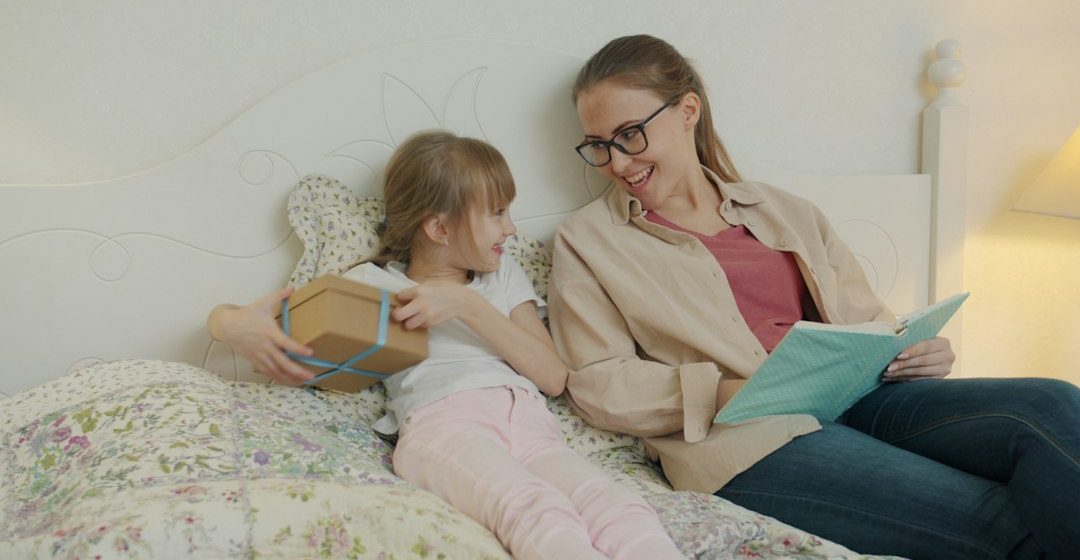
Shared reading is valuable even before a child can read independently. Adults can point to pictures, ask what a character might be feeling and invite the child to predict what happens next. If a family has few books, storytelling from memory, describing pictures or retelling a familiar event can also encourage language.
Caregivers can expand a child’s words without turning conversation into a test. If a child says “big truck,” an adult might respond, “Yes, a very large blue truck is carrying boxes.” This adds vocabulary while keeping the exchange warm and natural. Waiting for a child to answer and showing interest in their ideas also helps sustain conversation.
Support should respect families’ circumstances
Programmes are more likely to be useful when they recognise constraints such as long working hours, limited literacy, disability, language differences and lack of access to printed materials. Public libraries, early-childhood centres and community groups can help by lending books, sharing audio stories and offering practical demonstrations.
The review reinforces a hopeful message: early learning does not happen only at a school desk. Supportive interactions at home can help children build the language foundations they will use throughout education. The best programmes make those interactions achievable, enjoyable and appropriate for each family.